
Hydrogen From Rocks: A Breakthrough Clean Energy Solution That Could Also Store CO₂
As the global push for cleaner energy accelerates, scientists are exploring innovative ways to tackle two major climate challenges at once: producing low-carbon hydrogen and permanently removing carbon dioxide from the atmosphere.
A recent report from New Scientist highlighted emerging research suggesting that certain rock formations could potentially generate hydrogen while also storing CO₂ underground, creating a promising dual-purpose clean energy solution.
What Is Hydrogen From Rocks?
Hydrogen is widely considered a cornerstone of the clean energy transition. It can power vehicles, industrial processes, and electricity generation with zero direct carbon emissions at the point of use.
However, producing hydrogen sustainably remains a major challenge.
Most hydrogen today is produced from fossil fuels such as natural gas, resulting in significant greenhouse gas emissions. Green hydrogen, created using renewable electricity and electrolysis, offers a cleaner path but remains expensive and energy-intensive.
This has led researchers to explore naturally occurring geological hydrogen production.
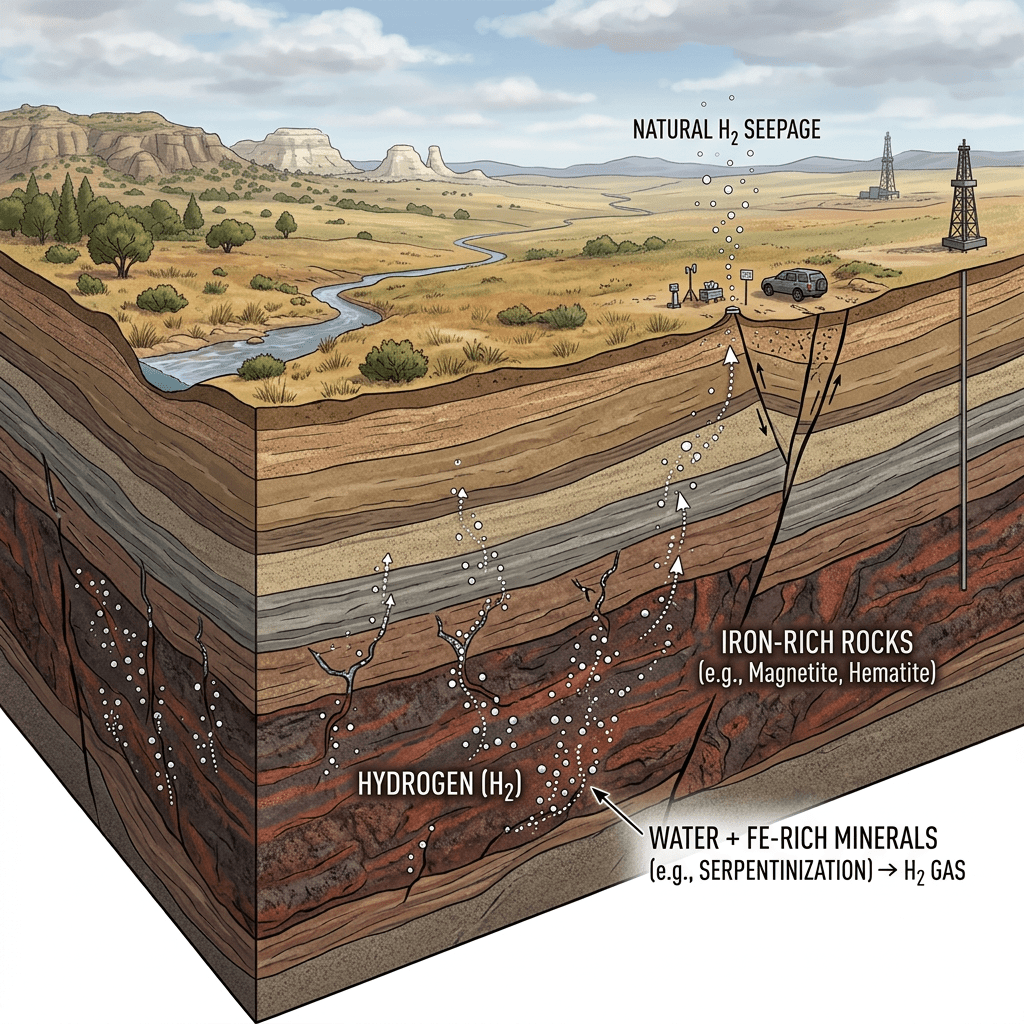
Certain iron-rich rocks can react with water through a process called serpentinization, releasing hydrogen gas naturally. Scientists are now investigating whether this reaction can be accelerated or engineered to create a scalable low-carbon hydrogen source.
How Rocks Could Store CO₂
The same geological formations may also help solve the carbon storage problem.
Some rock types can chemically bind with carbon dioxide, transforming CO₂ into stable minerals through a process known as carbon mineralization. Unlike conventional underground CO₂ storage, which relies on compressed gas containment, mineralization permanently locks carbon into solid rock structures.
This creates the possibility of combining hydrogen production with permanent carbon sequestration.
Why This Matters for Clean Energy
This emerging concept could offer several transformative benefits:
Cleaner Hydrogen Production
A natural geological hydrogen source could reduce dependence on carbon-intensive industrial hydrogen production.
Permanent Carbon Capture
Mineralized carbon storage provides a potentially safer and longer-lasting climate solution.
Industrial Decarbonization
Heavy sectors like steel, shipping, aviation, and chemicals could benefit from cleaner hydrogen fuel.
Improved Energy Economics
If scalable, naturally assisted hydrogen generation may reduce costs compared with some existing clean hydrogen methods.
Challenges Ahead
Several important questions remain before commercialization:
- Can enough hydrogen be produced economically?
- Which geological regions are suitable?
- How quickly do these underground reactions occur?
- What infrastructure would be required?
- What environmental safeguards would be necessary?
Final Thoughts
The concept of producing hydrogen from rocks while storing CO₂ represents one of the more intriguing clean energy innovations currently under exploration.
If successful, it could address two climate challenges simultaneously—clean fuel production and permanent carbon removal.
Source: New Scientist, article titled “We could generate hydrogen from rocks while storing CO₂ in them.”